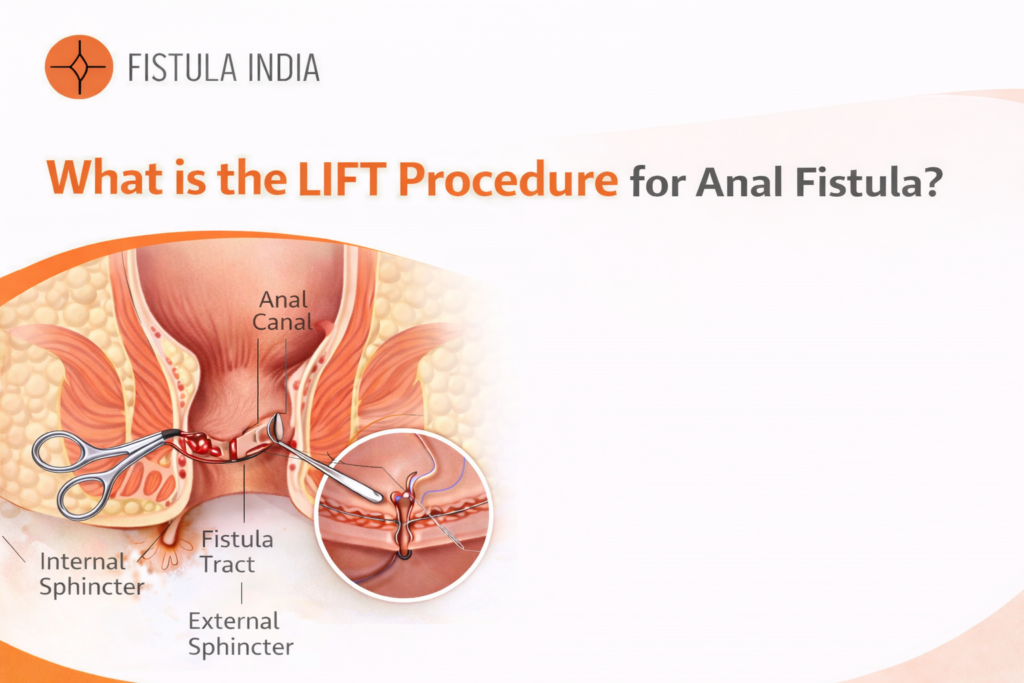
Anal fistula is a common anorectal condition that can cause pain, swelling, and persistent discharge near the anus. It usually develops after an infection in the anal glands that leads to an abscess. When the abscess drains, it may create a small tunnel between the anal canal and the skin around the anus. This tunnel is called a fistula.
Several surgical treatments are available to manage anal fistulas. One of the most effective and sphincter-saving techniques used today is the LIFT Procedure (Ligation of Intersphincteric Fistula Tract). This modern surgical approach is designed to treat the fistula while protecting the anal sphincter muscles, which are responsible for controlling bowel movements.
Understanding Anal Fistula
An anal fistula forms when an infection in the anal glands creates a passage between the internal part of the anus and the outer skin. In most cases, the condition begins with an abscess that drains either naturally or through medical treatment. However, instead of healing completely, the infection leaves behind a tract that continues to cause symptoms.
Common symptoms of anal fistula include:
-
Pain and discomfort near the anus
-
Swelling or redness around the anal area
-
Pus or fluid discharge from the fistula opening
-
Irritation or itching around the anus
-
Pain during bowel movements
-
Recurrent anal abscess
Anal fistulas rarely heal without surgical treatment, which is why procedures like the LIFT technique are used to permanently close the tract.
What is the LIFT Procedure?
The LIFT Procedure (Ligation of Intersphincteric Fistula Tract) is a surgical technique used to treat anal fistulas by closing the fistula tract in the space between the internal and external anal sphincter muscles.
The main goal of this procedure is to remove or seal the infected fistula tract while preserving the sphincter muscles. Protecting these muscles is extremely important because damage to them can lead to bowel control problems or incontinence.
The LIFT procedure is considered a safe and effective treatment, especially for complex fistulas where traditional surgeries might risk damaging the sphincter.
How the LIFT Procedure Works
The LIFT procedure is usually performed under regional or general anesthesia and typically takes about 30–45 minutes.
The process generally includes the following steps:
1. Identification of the Fistula Tract
The surgeon first identifies the internal opening and the path of the fistula tract using medical instruments or imaging techniques.
2. Accessing the Intersphincteric Space
A small incision is made in the area between the internal and external sphincter muscles.
3. Ligation of the Fistula Tract
The fistula tract is carefully isolated and tied off (ligated) to stop the spread of infection.
4. Removal or Closure of the Tract
The infected part of the tract is removed or sealed to prevent further drainage or infection.
5. Healing of the External Opening
The outer opening of the fistula is cleaned and allowed to heal naturally.
Because the procedure focuses on the tract between the muscles, it avoids cutting the sphincter muscles, which significantly reduces complications.
Benefits of the LIFT Procedure
The LIFT technique has become popular because of its effectiveness and safety. Some key advantages include:
1. Sphincter Muscle Preservation
The procedure protects the anal sphincter muscles, reducing the risk of bowel control problems.
2. Minimally Invasive Approach
Only a small incision is required, which leads to less tissue damage.
3. Reduced Risk of Incontinence
Since the muscles are preserved, patients have a much lower chance of experiencing incontinence.
4. Faster Recovery
Most patients recover relatively quickly and can resume normal activities within a short period.
5. Effective Treatment for Complex Fistulas
The LIFT procedure is often recommended for fistulas that pass through the sphincter muscles.
Recovery After the LIFT Procedure
Recovery after LIFT surgery is generally smooth when proper care instructions are followed.
Patients are usually advised to:
-
Maintain good hygiene in the anal area
-
Follow a high-fiber diet to prevent constipation
-
Drink plenty of fluids
-
Take prescribed medications and antibiotics
-
Avoid heavy lifting or strenuous activities for a few days
Most patients can return to light daily activities within a few days, although full healing may take a few weeks.
Regular follow-up visits with the surgeon help ensure that the fistula is healing properly.
Is the LIFT Procedure Right for You?
The LIFT procedure is often recommended for patients with transsphincteric or complex anal fistulas where preserving the sphincter muscles is important. However, the suitability of this treatment depends on several factors, including the location, type, and complexity of the fistula.
A consultation with an experienced colorectal or general surgeon is essential to determine the most appropriate treatment plan.
Conclusion
The LIFT Procedure (Ligation of Intersphincteric Fistula Tract) is a modern and effective surgical technique for treating anal fistulas. By targeting the fistula tract between the sphincter muscles, this procedure helps eliminate infection while preserving normal muscle function.
With benefits such as lower risk of complications, sphincter preservation, and faster recovery, the LIFT procedure has become one of the preferred treatment options for many patients suffering from anal fistulas.
If you are experiencing symptoms of an anal fistula, seeking timely medical advice can help you receive the right treatment and prevent further complications.