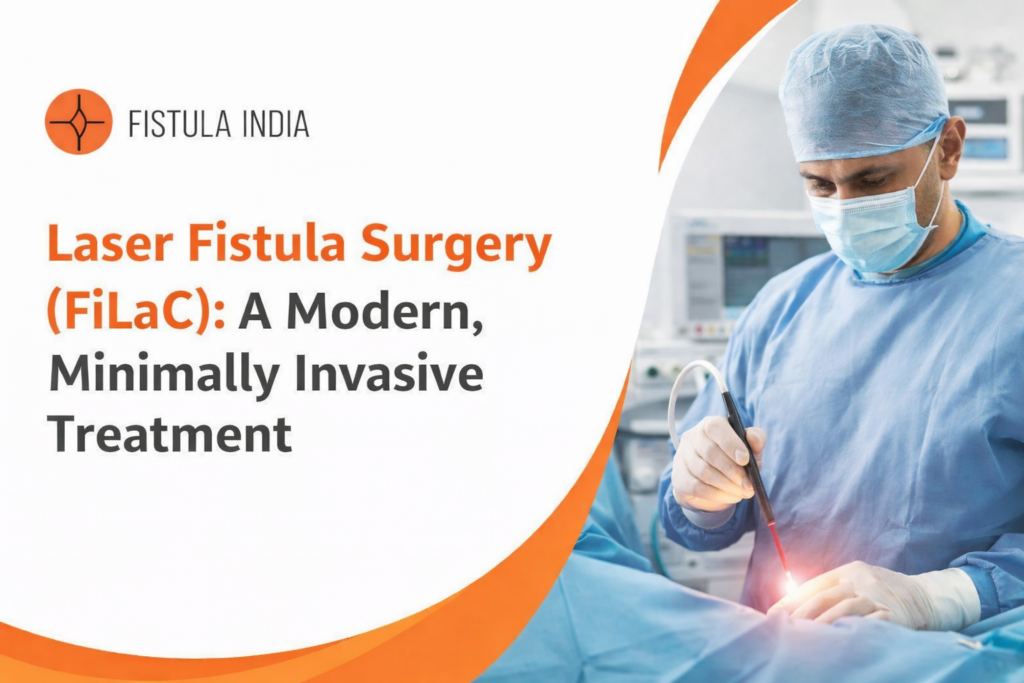
Anal fistula is a painful and uncomfortable condition that affects many people worldwide. Traditionally, treating fistulas required complex surgeries that involved cutting tissues, longer hospital stays, and extended recovery periods. However, advancements in medical technology have introduced safer and more effective solutions. One of the most advanced treatments available today is Laser Fistula Surgery (FiLaC – Fistula-tract Laser Closure).
FiLaC is a minimally invasive laser procedure designed to treat anal fistulas with less pain, minimal tissue damage, and faster recovery compared to conventional surgical methods.
What is an Anal Fistula?
An anal fistula is a small tunnel or abnormal passage that develops between the end of the bowel (anal canal) and the skin around the anus. It usually forms as a result of an infection in the anal glands that leads to an abscess. When the abscess drains, it can leave behind a tract connecting the inside of the anus to the outer skin.
Common symptoms of anal fistula include:
-
Persistent pain around the anus
-
Swelling or redness near the anal area
-
Pus or discharge from the opening
-
Irritation or itching around the anus
-
Recurrent abscess formation
-
Pain during bowel movements
If left untreated, fistulas rarely heal on their own and often require medical intervention.
What is Laser Fistula Surgery (FiLaC)?
FiLaC (Fistula-tract Laser Closure) is an advanced laser treatment used to close the fistula tract from the inside without damaging surrounding muscles or tissues.
In this procedure, a special radial laser fiber is inserted into the fistula tract. The laser energy is then delivered in a controlled manner while the fiber is slowly withdrawn. This energy shrinks and seals the fistula tract, allowing the tissue to heal naturally.
The primary goal of FiLaC is to treat the fistula while preserving the anal sphincter muscles, which are responsible for controlling bowel movements.
How the FiLaC Procedure Works
Laser fistula surgery is typically performed under regional or general anesthesia and usually takes 20–40 minutes depending on the complexity of the fistula.
The procedure generally involves the following steps:
-
Diagnosis and Mapping of the Fistula
The surgeon identifies the fistula tract using imaging techniques or probes. -
Cleaning the Fistula Tract
The infected tissue inside the tract is cleaned to remove debris and infection. -
Insertion of Laser Fiber
A thin radial laser fiber is inserted into the fistula tract. -
Laser Energy Application
Laser energy is delivered while gradually pulling the fiber back, sealing the tract. -
Closure and Healing
The tract collapses and heals naturally without major incisions.
Because the procedure is minimally invasive, most patients can return home the same day.
Advantages of Laser Fistula Surgery
Laser fistula treatment offers several advantages compared to traditional fistula surgeries such as fistulotomy or cutting procedures.
1. Minimally Invasive
The procedure does not involve large cuts or stitches, reducing trauma to surrounding tissues.
2. Less Pain
Patients typically experience significantly less pain compared to conventional surgery.
3. Faster Recovery
Most patients can return to normal activities within a few days.
4. Sphincter Muscle Preservation
One of the biggest benefits of FiLaC is that it protects the anal sphincter muscles, reducing the risk of incontinence.
5. Short Hospital Stay
In many cases, the surgery is performed as a day-care procedure, meaning patients can go home the same day.
6. Lower Risk of Complications
There is generally less bleeding, minimal infection risk, and better overall healing.
Who is a Good Candidate for FiLaC?
Laser fistula surgery is suitable for many patients suffering from anal fistulas, including:
-
Patients with simple or complex fistulas
-
Individuals looking for minimally invasive treatment
-
Patients concerned about sphincter damage or incontinence
-
People with recurrent fistulas after previous surgeries
However, the suitability of FiLaC depends on the fistula’s type, location, and complexity. A specialist consultation is necessary to determine the best treatment approach.
Recovery After Laser Fistula Surgery
Recovery after FiLaC is generally smooth and faster compared to traditional methods.
Patients are usually advised to:
-
Maintain proper hygiene in the anal area
-
Take prescribed medications and antibiotics
-
Follow a high-fiber diet to avoid constipation
-
Drink plenty of fluids
-
Avoid heavy lifting for a few days
Most patients can resume light daily activities within 2–3 days.
Regular follow-ups with the doctor ensure proper healing and help prevent recurrence.
Are There Any Risks?
Although FiLaC is considered very safe, like any medical procedure, there may be some minor risks such as:
-
Mild discomfort or swelling
-
Temporary discharge from the treated area
-
Rare chances of fistula recurrence
However, complications are generally much lower compared to traditional surgeries.
Why Choose Laser Treatment for Fistula?
Laser technology has transformed the treatment of anorectal conditions by offering precision, safety, and faster healing. FiLaC is particularly beneficial because it treats the fistula internally while preserving normal anatomy.
Patients today prefer laser surgery because it allows them to recover quickly, experience less discomfort, and return to their routine life sooner.
Conclusion
Laser Fistula Surgery (FiLaC) is a modern, minimally invasive, and highly effective treatment for anal fistulas. By using advanced laser technology, this procedure closes the fistula tract with minimal tissue damage, reduced pain, and faster recovery.
If you are experiencing symptoms of an anal fistula, consulting a qualified specialist can help you explore advanced treatment options like FiLaC and ensure safe, long-lasting relief.