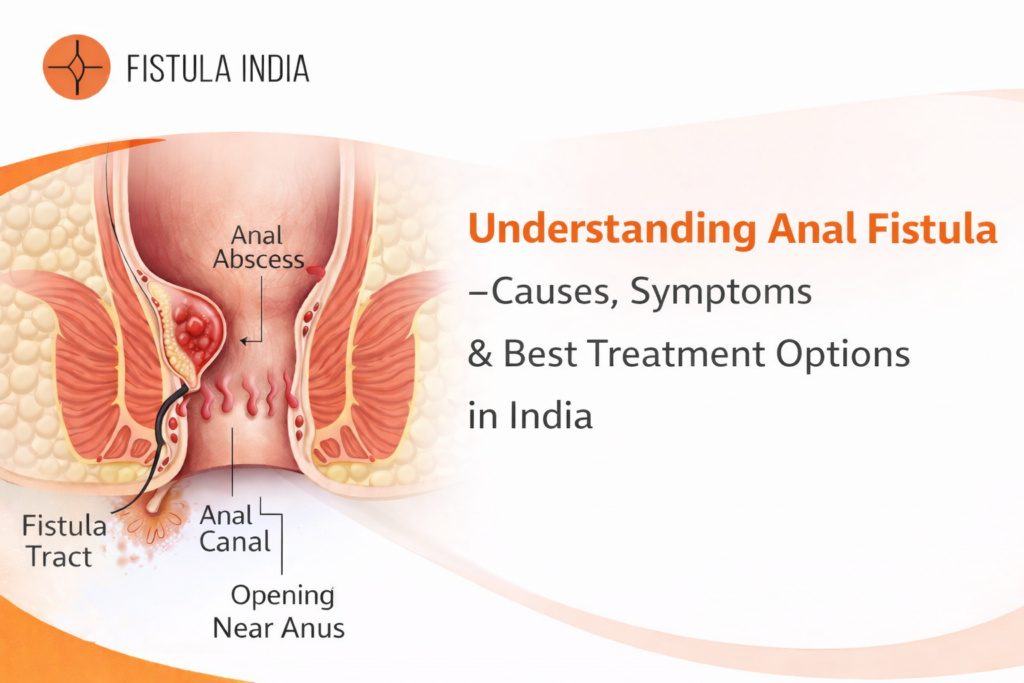
Anal fistula (medically called fistula-in-ano) is a distressing and often painful condition that affects many people worldwide, and India has become one of the leading destinations for expert fistula care and management. This blog explains what anal fistula is, how it affects your health, and the modern and traditional ways it can be treated.
What Is an Anal Fistula?
An anal fistula is an abnormal tunnel that connects the inside of your anal canal or rectum to the skin surface near the anus. These tunnels form when a previous anal abscess (a painful pus-filled infection) does not heal completely and creates a permanent tract.
👉 In simple terms, imagine an internal passage where it shouldn’t exist: infection inside the bowel finds a way to drain outward through the skin — that’s what a fistula does.
Common Symptoms to Watch For
Here are the most common signs of a possible anal fistula:
✔ Persistent pus or fluid discharge near the anus
✔ Pain, irritation, or swelling around the buttocks
✔ Redness and tenderness of the skin around the anus
✔ Recurrent abscesses or discomfort when sitting
✔ Fever in more severe cases
Note: If left untreated, a fistula usually won’t heal by itself and may cause chronic infection or discomfort.
What Causes Anal Fistula?
Fistulas generally occur after an infection of the anal glands. When these glands get blocked and form an abscess, the pressure of the infection often “bursts” a tunnel to the skin’s surface to drain.
Other less frequent causes include:
🔹 Inflammatory bowel diseases (like Crohn’s)
🔹 Trauma or surgical injury near the anus
🔹 Chronic infection or immune-mediated inflammation
🔹 Post-radiation changes or other underlying diseases
Diagnosis — How Doctors Find It
Early diagnosis allows better treatment outcomes. Common methods include:
• Clinical examination
• MRI or ultrasound to trace the fistula track
• Fistulogram (special imaging with dye)
• Endoscopy if more internal involvement is suspected
These help your specialist understand how deep or complex the fistula is.
Treatment Options — Traditional and Modern
Surgical Treatments
Surgery is usually the most effective cure for persistent anal fistulas. Options include:
Fistulotomy / Fistulectomy
The most common approach where the fistula tract is opened or removed to heal from within.
LIFT Procedure (Ligation of Intersphincteric Fistula Tract)
Useful for complex fistulas; it preserves the sphincter muscle, reducing risks of incontinence.
Seton Placement
A thread (seton) is placed to drain and slowly heal the tract over time.
Laser or Minimally Invasive Techniques
Advanced options like FiLaC (laser closure) offer faster recovery with less pain and scarring.
Ayurvedic and Traditional Kshar Sutra Therapy
In India, Kshar Sutra treatment is a time-tested Ayurvedic approach where a medicated thread is used to treat the fistula track. Many patients prefer this method because it’s minimally invasive and aims to reduce recurrence.
Note: Always consult with a qualified proctologist or colorectal surgeon — even with alternative therapies.
Recovery and Care After Treatment
✔ Most procedures allow you to go home the same day or after short hospitalization.
✔ Recovery time depends on surgery type — it may range from a few weeks to a couple of months.
✔ Pain and discomfort are common early on, but improved hygiene and dietary fiber greatly help healing.
Why Early Treatment Matters
An untreated fistula won’t usually heal on its own and can result in:
🚨 Recurring infections
🚨 Chronic pain
🚨 Scarring
🚨 Risk of spread or complications
Timely medical care prevents these and improves quality of life.
Final Thoughts
Anal fistula may be a sensitive and painful condition, but with today’s advances in medical and Ayurvedic care, effective and long-lasting treatment is possible. Whether you’re exploring laser surgery, traditional Ayurvedic options like Kshar Sutra, or surgical approaches like LIFT or fistulotomy, the key is early diagnosis and care by skilled specialists.